|
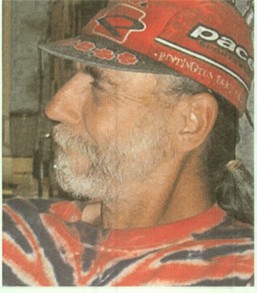
Bob Byers, 58: Bike courier, outlaw
|
|||
| Died while on a delivery at 58 `He had all the friends he wanted'
Toronto Star, September 26, 2005 By Catherine Dunphy His buddies stopped traffic June 17, the day after he dropped dead on the job. Bob Byers was 58; one of the oldest bike couriers in town, an urban outlaw who traded in jobs more often than some people get haircuts but at the same time a mentor and father figure to any Lycra-clad, pierced kid starting out in the strange and dangerous rebel world where work is weaving 10-speeds through Toronto traffic. Everybody knew him as Biker Bob, although some of the young ones took to calling him Old Bob — probably because he was always good for a loan, even if the tab was up to $900, as was the case with at least one of the guys who hung around on their breaks outside the Duke of Richmond pub in the Eaton Centre. More often than not, on Mondays Biker Bob would stand them to a round of beers with the winnings from his weekend chess games at the tables in the park near St. Michael's church. This was his world; they were his family — even his own family believes that. "His second family was that courier community," said his sister Mary Gordon of Peterborough. "He found a way to be alone and in a group. It was the only way he could handle life, to be alone." "The courier business was perfect for him, " said his younger brother Jim, a TTC driver.
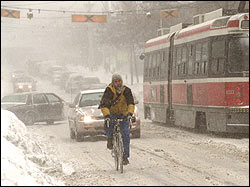
For the past three or four Christmases, Jim Byers would find a frozen turkey on the porch, a gift from his brother, who refused every year to join the family for Christmas dinner. It wasn't a good time of year for Byers anyway; it was a time when he usually lost his battle with booze. "He was the family hermit, my uncle was kind of a recluse," said Kip Gordon. "But he lived the way he wanted to. He was a free spirit." Byers lived near his nephew and always stopped him on the street to ask about the family. "He was happy. He had all the friends he wanted in the world," Kip Gordon said. "In that crowd no one asks unnecessary questions but they have unconditional loyalty to each other." A long-faced grizzled guy with skinny legs, rock hard thighs and a beer gut, whose grey ponytail trailed halfway down his back, he was opinionated and stubborn and convinced he was right about most things. He lived in one of the city's real lofts — a 300 sq. ft. space accessed by a freight elevator that had no stove and was littered with bike parts. The bathroom was down the hall; inside Byers had one chair and one plate that he ate from — but it was Royal Doulton china. He may have been an iconoclast and anti-authoritarian, but he subscribed to The Globe and Mail and he was a stickler for the rules of the road. He never rode on sidewalks and was humiliated on the one occasion he got a ticket (for failing to stop at a stop sign). He was a complicated guy, hating bosses and unions, but loving to work. A photo was taken of him on Jan. 13, 1999, after the mayor of the time, Mel Lastman, called in the army to deal with the snowstorm that had socked Toronto — but not Biker Bob. "That was another part of Bob's pride — he did it in winter," said Jim Byers. His bikes were stolen and banged up — his last accident was three or four years ago when he was sent flying by a right-turning car. "He rode in a city that was dangerous and polluted and it was a thrill for him," said his nephew. Toronto has had a thriving courier population since the heydays of the '80s, when at least 500 of them were working the city's streets. It's been one of the main world cities for them, according to Wayne Scott of the Hoof & Cycle Active Transport Guild and a courier himself. "We're as much a fixture in the downtown as the CN Tower or the Scotia Plaza," he said. He was a legend among couriers and so after he died about 150 of them gathered to hoist a few to him, then hoist their bikes over their shoulders and trek down Albert St. to outside 20 Queen St. W., the site of Byers' last delivery, to lay their bikes on the road and stop traffic — their way to pay tribute. "I was so happy when I heard that," said Kip Gordon. "He hated drivers." One of five children, he grew up in Mattawa but left home at 16 and got a job in Toronto making a buck an hour working the stock room on roller blades at the Canadian Tire store at Yonge and Davenport. He went back home to complete grades 11 and 12, then took off again, hitchhiking across Canada in 1966 before returning to sign up for the army. He was rejected because of a heart defect incurred when he suffered from rheumatic fever as a child. He married and fathered two children and went to work in the mines. When his marriage broke up after three years, he signed away his parental rights because his ex-wife's new husband was taking over, and began several adventurous years wandering around the country. In 1982 he settled down with a partner, and worked as a bookbinder until 1991. "He ended up binding the Sears catalogue," said his sister Mary Gordon. "He tried to fit in at different times in his life." But when this relationship ended, he became a courier. He compromised his healthy work lifestyle by smoking and drinking too much. He knew he was living on borrowed time after a doctor diagnosed serious problems with his aortic valve five or six years ago and told him to alter his lifestyle to allow him to operate. Byers never did. He always told them he never wanted a funeral — "Throw me off a bridge first," he'd say — and his family obeyed his wishes. But on Sept. 10 they held a memorial service for him outside on the lawn of Metropolitan United Church. A lot of his courier friends were there, their bikes forming a sort of honour guard. "I think that is what he would have wanted," said Mary Gordon. |